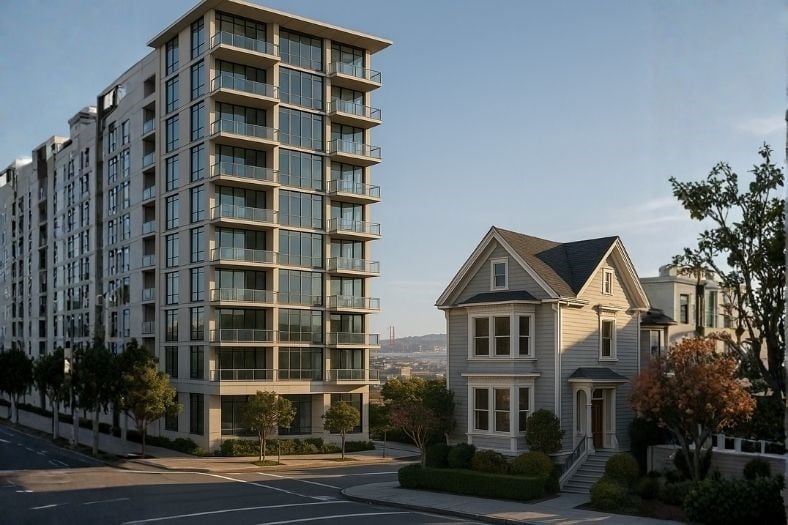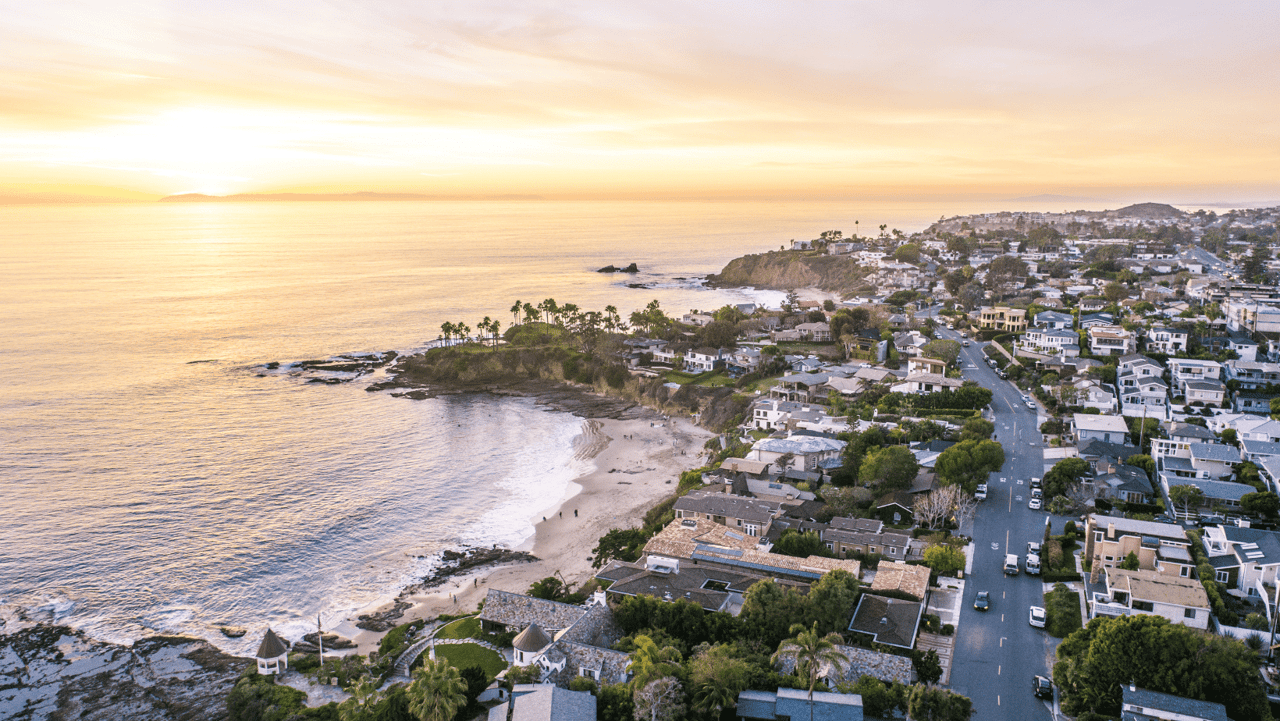
San Francisco homebuyers are searching to move into Mission Viejo more than buyers from any other metro in the country, per Redfin's most recent migration data. The reason is mostly arithmetic. The median San Francisco County home sold for $1.7M in March 2026 at $1,120 per square foot. The median Mission Viejo home sold for $1.1M at $647 per square foot. That means a family selling in SF and buying in MV gets roughly 73% more square footage per dollar, in the only master-planned city in Orange County, in one of the safest large cities in California, while keeping their California income tax bill identical. This is the trade Bay Area tech families have been making since 2020 and continue to make in 2026. Here is exactly how the math works.
The Migration Data: Who's Actually Moving
Per Redfin's Q4 2025 migration data, San Francisco homebuyers searched to move into Mission Viejo more than any other metro, followed by Boston and Seattle. Nationally, 4% of homebuyers searched to move into Mission Viejo from outside metros.
This is not a one-quarter blip. The Bay Area to South OC corridor has been the dominant migration pattern into Mission Viejo for five years. It accelerated through 2020-2022 (the remote-work wave), softened slightly in 2023-2024 (rate shock), and is reaccelerating in 2026 as Bay Area home prices set new highs and hybrid work patterns stabilize.
The household profile is consistent: dual-income tech family, $250K to $500K combined household income, two school-age kids, currently in a 1,400-2,000 sq ft home in San Mateo County, Santa Clara County, or San Francisco proper. Considering or executing a move-down trade for more space, better schools, and lower cost of living without leaving California.
The Price Math: SF/Peninsula vs. Mission Viejo
| Metric | San Francisco County | San Mateo County | Santa Clara County | Mission Viejo |
|---|---|---|---|---|
| Median sale price | $1,700,000 | $2,058,000 | $1,700,000+ | $1,100,000 |
| YoY change | +19.0% | +11.6% | Strong | +1.2% |
| Median $/sq ft | $1,120 | ~$1,200 | ~$1,100 | $647 |
| Median DOM | 14 days | 14 days | 14 days | 41 days |
| Bay Area buyer searching MV | n/a | n/a | n/a | #1 inbound metro |
Sources: Redfin March 2026, CAR/Norada December 2025.
The implication for a Bay Area family selling and buying in MV:
Scenario 1: Cash-out trade. Sell a $2,058,000 San Mateo home. Buy a $1.7M Pacific Hills home (Mission Viejo's highest-value tract). Walk away with $300K+ in cash after transaction costs.
Scenario 2: Same-money upgrade. Sell a $1.7M San Francisco condo. Buy a $1.7M Pacific Hills single-family home with 3,000 sq ft, two-car garage, pool, lot, and CUSD zoning.
Scenario 3: Move-down for cost relief. Sell a $1.7M Santa Clara home. Buy an $1.1M Mission Viejo single-family home. Reduce mortgage by ~$3,500/month at current rates while keeping the same general standard of living.
In all three scenarios the family stays in California, keeps their California state income tax bill, and remains eligible for California's homeowner protections including Prop 13 and Prop 19.
What You Actually Get for the Trade
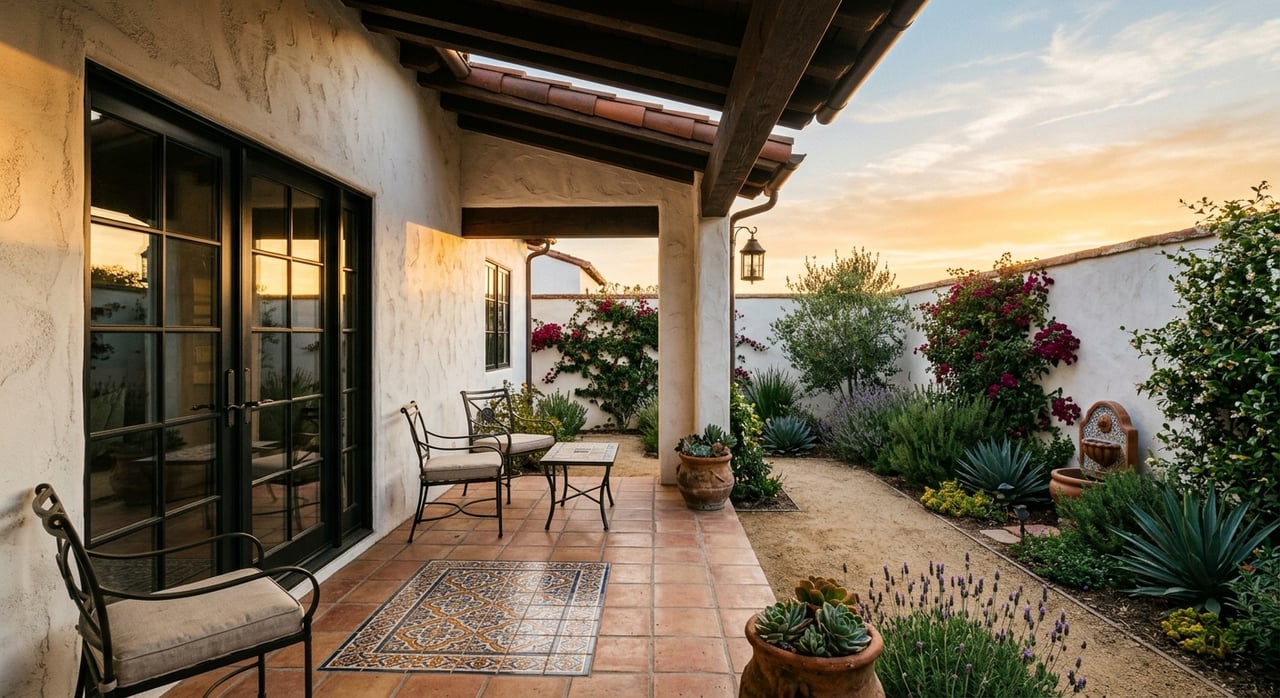
A $1.7M Pacific Hills home in 2026 looks like this:
- 4-5 bedrooms, 3-4 baths
- 2,800-3,500 sq ft of living space
- 5,500-7,000 sq ft lot
- Two-car attached garage, often three-car
- Saddleback Mountain or canyon view
- Built 1990-1997 by Brighton, Lewis, Standard Pacific, or Kaufman and Broad
- Updated kitchen, master bath, and flooring on most active listings
- Backyard with room for a pool, or pool already in place
- Cul-de-sac or near-cul-de-sac position
- CUSD school zoning
A $1.7M San Francisco home in 2026 looks like this:
- 2-3 bedrooms, 1-2 baths
- 1,200-1,800 sq ft of living space
- 1,500-3,000 sq ft lot or zero-lot-line
- Street parking or a single-car garage with steep driveway
- View if you are lucky, no view if you are not
- Built 1900-1925, last meaningfully updated 1995
- Shared walls or close-cluster construction
- Postage-stamp backyard or no backyard
- SFUSD school zoning with lottery placement
The trade is not subtle.
The Tax Math
California's progressive state income tax runs 9.3% to 13.3% on incomes above $300K. A dual-income tech family at $400K combined household income pays roughly $35K to $50K per year in California state income tax.
That tax bill stays with them anywhere in California. It does not change moving from Palo Alto to Mission Viejo. It would only change moving out of California entirely (to Texas, Florida, Nevada, Tennessee, or Washington, where state income tax is zero).
So why don't more Bay Area families leave California instead of moving to Mission Viejo?
Three reasons.
Prop 13 anchoring. Owners who bought in the Bay Area before 2015 have a Prop 13 assessed value far below market value. Their property tax bill is artificially low. Leaving California means losing that protection. Moving within California means keeping it.
Prop 19 transfer (for 55+). Owners 55 and older can transfer their Prop 13 base to a new California home, up to three times in their lifetime. A Bay Area downsizer-to-MV uses Prop 19 to keep their low property tax base on the new MV home. A move to Texas means starting over on tax basis.
Family proximity and cultural fit. Most Bay Area tech workers have parents, siblings, or extended family in California. Leaving the state has social and logistical costs that the spreadsheet alone does not capture.
The result: California's progressive income tax is the structural reason Bay Area families trade down within the state rather than out of it. Mission Viejo is where that trade lands more than anywhere else in South OC.
The Schools Math
Bay Area families coming to Mission Viejo are doing it for schools as much as for price.
Mission Viejo is split between two school districts. Capistrano Unified School District (CUSD) covers most of the southern and eastern portions of the city, including Pacific Hills, Deerfield, parts of Lake Mission Viejo communities, and the newer tracts. Saddleback Valley Unified School District (SVUSD) covers the western and central portions, including Aegean Hills, Barcelona North, and parts of Mission Viejo Central.
Both districts perform at or near the top of South Orange County. CUSD operates Capistrano Valley High School and consistently ranks among California's stronger comprehensive districts. SVUSD operates Mission Viejo High School and has been named Best South Orange County School District three years running (2023, 2024, 2025) by Parenting OC Magazine.
Compared to typical SFUSD assignments (lottery-based, highly variable outcomes), Mission Viejo's neighborhood-school feeder system gives Bay Area buyers something they have never had: predictable, address-tied school assignment to a top-performing public school.
For a Pacific Hills home, the typical feeder pattern includes Bathgate Elementary (CUSD), Newhart Middle School (CUSD), and Capistrano Valley High School (CUSD). Verify exact assignment for any specific address.
Safety and Lifestyle: Why MV Specifically
Mission Viejo is the only master-planned city in Orange County and consistently ranks as one of the safest large cities in California. Both data points matter to Bay Area families with kids.
Master-planning means the streets, schools, parks, and commercial centers were designed in one integrated plan starting in 1965. The result: minimal commercial frontage on residential streets, abundant parks (33 parks across roughly 18 square miles), and a walkable feel that Bay Area families recognize from older European-style city planning.
Safety means low violent crime, low property crime, well-staffed police, and the kind of low-anxiety daily living that families with school-age kids actively seek out.
Lake Mission Viejo is the city's signature amenity: a 124-acre private lake with sandy beaches, swimming, fishing, unlicensed boating, summer concerts, and resident events. Membership is automatic on qualifying homes (with deed-tied LMVA eligibility). Bay Area families who grew up with Bay Area waterfront recognize the lifestyle value immediately.
Other lifestyle infrastructure: the Marguerite Recreation Center (one of OC's largest public aquatic complexes), the Mission Viejo Tennis Center, Oso Creek Trail (4 miles of paved trail), the Mission Viejo Library, the Norman P. Murray Community Center, and the Mission Viejo Country Club.
The Commute and Hybrid-Work Reality
Mission Viejo sits 50 miles south of downtown LA and 60 miles north of San Diego. The 5 freeway runs along the eastern edge of the city. The 405 is 12 miles west.
For families coming from the Bay Area, the practical commute math:
- John Wayne Airport (SNA) is 20 minutes north via the 5. Direct flights to SFO, OAK, SJC multiple times daily.
- Los Angeles International (LAX) is 60-75 minutes north via the 5/405.
- South County employers (Irvine Spectrum, Aliso Viejo, Mission Viejo itself) are 5-20 minutes within MV.
- LA-based hybrid roles work fine on a 1-2 days per week onsite schedule.
The Bay Area tech families landing in MV are mostly remote or hybrid by 2026. Full-time onsite is the exception. The few who do commute regularly use SNA-SFO flights and treat the airport like a transit station.
Which Mission Viejo Neighborhoods Bay Area Families Actually Pick
Three neighborhoods capture the majority of Bay Area family relocations.
Pacific Hills. $1.73M median, +5.8% YoY. CUSD zoning. Built 1990-1997. Largest cluster of move-up Bay Area tech families. View lots, Mediterranean architecture, low HOAs. The flagship destination.
Lake Mission Viejo communities (Mallorca, Finisterra on the Lake, Hidden Lakes, Tres Vistas). $1.5M to $6M+ depending on lakefront access. Lake membership transferable with deed on qualifying homes. The lifestyle play.
Deerfield. $1.2M-$1.45M. CUSD zoning. Built late 1970s. Walkability to Oso Creek Trail. Strong for younger families with elementary-age kids.
Secondary picks: Aegean Hills (SVUSD, larger lots, $1.38M median), Madrid pockets (CUSD or SVUSD depending on street, $1.2M-$1.45M), and Barcelona North (SVUSD, $1.2M median with per-square-foot growth up 38.7% YoY).
For Bay Area families specifically prioritizing schools, the conversation typically narrows to Pacific Hills, Deerfield, and Lake Mission Viejo communities inside CUSD boundaries.
The Practical Timeline for the Move
The clean Bay Area to MV relocation timeline:
Month 0-1: Sell the Bay Area home. SF and Peninsula homes are closing in 14 days median, so timeline is fast.
Month 1-2: House hunting in MV. Two trips of 2-3 days each is typical. Most Bay Area buyers identify their preferred neighborhood on Trip 1 and write an offer on Trip 2.
Month 2-3: Escrow on the MV purchase. MV escrows close in 30-35 days for well-prepared buyers.
Month 3-4: Move-in. School enrollment for CUSD or SVUSD requires the new address and proof of residency. Both districts open enrollment year-round.
Total: 90-120 days door to door for families who are decisive and prepared.
Families who try to coordinate sale and purchase to the same week often introduce unnecessary stress. Most successful Bay Area relocations sell first, rent short-term in MV for 30-60 days, then close on the purchase.
FAQ
How does the median home price in Mission Viejo compare to San Francisco in 2026? San Francisco County median sale price was $1.7M in March 2026 at $1,120 per square foot. Mission Viejo median was $1.1M at $647 per square foot. A Bay Area family making the move gets roughly 73% more square footage per dollar.
Why are Bay Area families moving to Mission Viejo specifically? Mission Viejo is the #1 metro destination for San Francisco homebuyers searching to move, per Redfin's Q4 2025 migration data. The combination of price (median $1.1M vs SF's $1.7M), schools (CUSD and SVUSD both top-rated), safety (one of California's safest large cities), and amenities (Lake Mission Viejo, master-planned design) makes it the most popular South OC destination for Bay Area relocators.
Will I pay less in taxes moving from the Bay Area to Mission Viejo? Not on California state income tax. The 9.3% to 13.3% progressive bracket stays with you anywhere in California. You will pay similar effective property tax rates (roughly 1% to 1.1% of purchase price), and you may benefit from Prop 19 if you are 55+ and want to transfer your Prop 13 base from your Bay Area home to your new MV home.
Which Mission Viejo neighborhoods are most popular with Bay Area buyers? Pacific Hills (median $1.73M, CUSD zoning, built 1990-1997) is the flagship destination. Lake Mission Viejo communities including Mallorca, Finisterra on the Lake, Hidden Lakes, and Tres Vistas are the lifestyle play. Deerfield is strong for younger families with elementary-age kids. Aegean Hills and Madrid pockets serve as secondary picks at slightly lower price points.
What school district covers Mission Viejo for Bay Area families? Mission Viejo is served by two districts. Capistrano Unified School District (CUSD) covers Pacific Hills, Deerfield, parts of Lake Mission Viejo communities, and the newer tracts. Saddleback Valley Unified School District (SVUSD) covers Aegean Hills, Barcelona North, and parts of central MV. Both are top-rated. Verify exact assignment for any specific address.
How long does the relocation actually take from sale to move-in? Most successful Bay Area to MV relocations take 90 to 120 days end to end. Sell the Bay Area home first (14-day median close in SF), do two MV house-hunting trips, close on the MV purchase in 30-35 days, then move. Renting short-term in MV for 30-60 days between sale and purchase is common.
Can I use Prop 19 to transfer my property tax base from the Bay Area? Yes if you are 55 or older. Proposition 19 lets you transfer your Prop 13 property tax base to a new California home anywhere in the state, up to three times in your lifetime. For Bay Area downsizers and right-sizers moving to MV, this is the single biggest financial advantage of staying within California.
What does the commute look like for Bay Area families who still work in the Bay Area part-time? John Wayne Airport (SNA) is 20 minutes from Mission Viejo with direct flights to SFO, OAK, and SJC multiple times daily. Most Bay Area tech families landing in MV are remote or hybrid by 2026 with 1-2 days per week of onsite work, which the SNA flight schedule supports without difficulty.