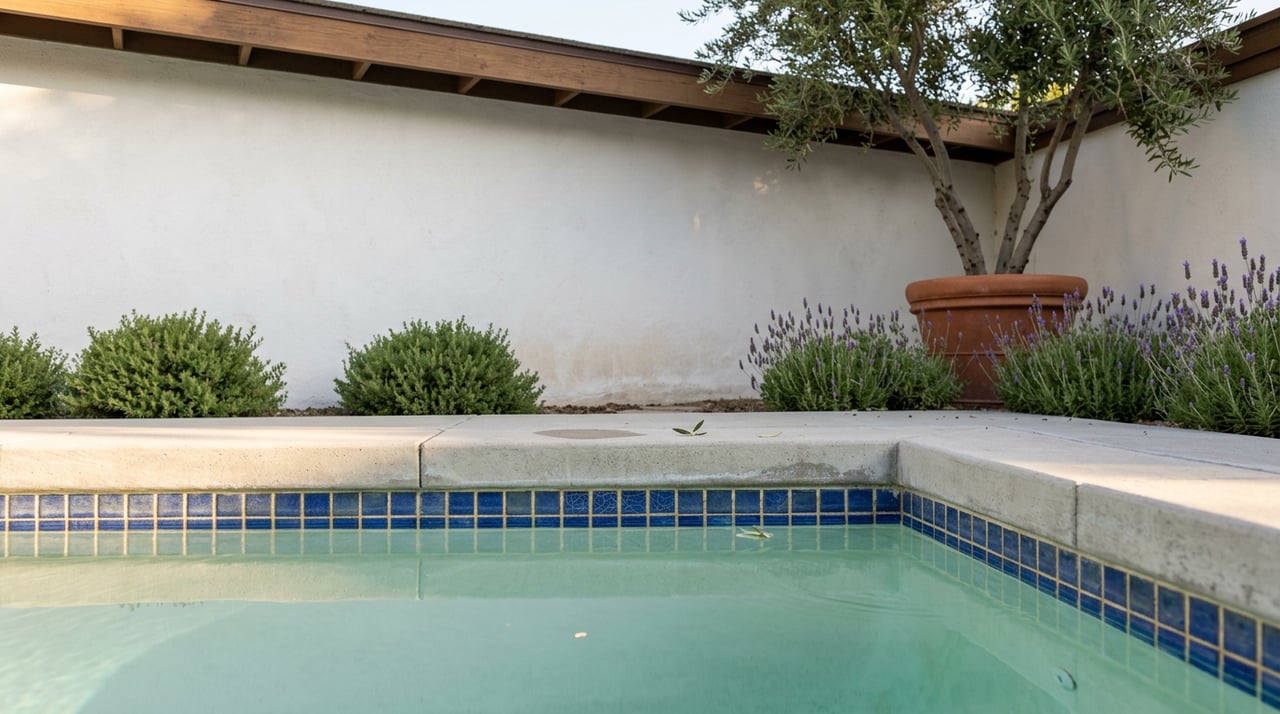
The inspector crouches at the gate latch on a 1979 tract home off Marguerite Parkway, clipboard against his knee, and asks the seller a question she wasn't expecting: does this pool have a second safety feature anywhere, or just the door alarm. She built this pool's deck furniture collection over twenty summers. She has never once thought of the pool as a compliance item. Now it's the reason her escrow just paused.
That scene plays out across Mission Viejo more often than most sellers expect, and the reason is arithmetic as much as law. This is a city where the original tract-era pool stock runs deep, and where the state's pool safety rules changed shape twice since those pools went in the ground. Sellers assume age protects them. It doesn't, because the rule that matters most gets triggered by the sale itself, not by when the pool was built.
The assumption that costs time, not money
California's Swimming Pool Safety Act started simple: in 1996, new and remodeled pools needed one safety feature from an approved list. In 2017, state lawmakers passed SB 442, doubling that requirement to two features for any private single-family pool built or substantially remodeled going forward. The law's own backers pointed to the reason: statewide data showed roughly 160 drowning deaths among California children ages one to four over a five-year stretch, with hundreds more hospitalized for drowning-related brain injuries. Two layers of protection instead of one was the fix.
What sellers in Mission Viejo tend to miss is the scope. The law doesn't only apply when a permit gets pulled for new construction or a remodel. It also applies, by design, to any pool involved in the sale of a home. That single clause is the whole story. A pool poured in 1978, never touched since, still gets looked at the moment it changes hands, because the transaction itself is the trigger, not the birth certificate on the plaster.
So the grandfathering sellers count on is real, but narrower than they think. It protects an untouched older pool from being forced into a full retrofit on its own timeline. It does not protect that same pool from a buyer's inspector walking the yard during escrow and writing down exactly what's there and what isn't.
What's actually sitting behind most Mission Viejo backyards
This matters more here than in most cities because of how much of Mission Viejo's housing stock came with a pool baked in from the start. Werth Builders, a pool contractor that has worked across the city since 1994, describes the pattern plainly: original 1970s and 80s tract pools cluster in El Dorado and Madrid, waterfront and view-oriented builds sit around Lake Mission Viejo, and the 55-plus community at Casta del Sol carries its own generation of pools designed with different entry and accessibility needs. Add Aegean Hills and Castille to that list and you've got a city where the pool is often original equipment, not a later addition.
That means the plumbing, the pump, the filter, and the surface underneath the water are frequently original too, or close to it. None of that is unusual for a planned community built out in a single era. It does mean that when a compliance conversation opens at escrow, it rarely opens alone.
Two different price tags, discovered in the same afternoon
Here's the part that catches people off guard: the safety-feature fix and the pool-condition fix are not the same expense, but they tend to surface together, and sellers often can't tell them apart when the inspection report lands.
The safety-feature side is usually the cheaper problem. A self-latching gate, a door alarm, or a compliant fence section is hardware and labor, not a construction project. The condition side is a different animal entirely. Local 2026 pricing gives a sense of the range:
| Project | Typical cost | Typical timeline |
|---|---|---|
| Resurface only | $5,500 to $26,000+ | 7 to 14 days |
| Full pool remodel | $30,000 to $90,000+ | 2 to 6 weeks |
| New pool decking | $12,000 to $55,000 | 7 to 21 days |
| In-ground spa | $20,000 to $50,000 | 4 to 8 weeks |
A separate cost survey from earlier this year put a basic plaster-only resurface as low as $705 to $801 for smaller pools, with pebble or quartz aggregate finishes running $3,500 to $10,000 depending on polish level, and a fuller upgrade that includes waterline tile, decking, and plumbing or electrical repairs landing between $8,000 and $22,000 or more.
The gap between "add a latch" and "replace the surface" is the whole reason sellers get blindsided. The compliance fix might run a few hundred dollars. The plaster underneath, chalky and thirty years past its install date, is a five-figure conversation the buyer's agent will absolutely raise once the inspector's flashlight finds it.
The clock makes it worse, not the cost
None of this would matter much if pool projects moved at the speed of paperwork. They don't. A resurface alone takes seven to fourteen days once work starts. A full remodel runs two to six weeks. Decking work adds another one to three weeks on its own. None of that includes the four to eight weeks of design and permitting that typically happens before a crew ever breaks ground on anything beyond a simple resurface.
Stack that against a standard 30 to 45 day escrow and the math gets uncomfortable fast. A seller who discovers a compliance gap or a failing surface after an offer is accepted is negotiating repairs, credits, or timeline extensions under pressure, with a buyer who now has leverage they didn't have during showings.
The water itself adds a line item nobody plans for
Orange County's water carries moderate mineral content and runs higher in alkalinity than water in many other parts of the state, which means local pools need more frequent pH and alkalinity adjustment than a generic maintenance schedule assumes. Combine that with original 1970s and 80s equipment still doing the work in a lot of Mission Viejo backyards, and you get pumps and filters that run harder, wear faster, and leak sooner than newer systems would.
As of this year, weekly professional service in the area typically runs $130 to $220 a month. Sellers who've kept that service current walk into an inspection with a paper trail. Sellers who've let the pool coast on occasional attention are the ones most likely to hear "the pump needs replacing" in the same conversation as "the gate isn't compliant."
The move that flips the order of operations
The sellers who avoid the mid-escrow scramble do one thing differently: they get the pool looked at before the listing goes live, not after an offer comes in.
- Have a licensed pool professional document exactly which safety features are currently in place, so you know your number going in rather than finding out from a buyer's inspector.
- Separate the two budgets in your own head before anyone else raises them. A missing latch is a repair. A failing plaster surface is a renovation decision, and it's yours to make on your own timeline if you make it early.
- Pull together whatever service records exist. A visible maintenance history changes the tone of a buyer's questions about pump age and filter condition.
- If a fix is needed, price the timeline against your target closing date, not just the dollar amount. A two-week resurface fits inside most escrows. A six-week remodel usually doesn't.
FAQ
If my pool was built before the 1996 law even existed, does it still need to meet the two-feature standard to sell? The two-feature requirement under SB 442 attaches to new construction and substantial remodels, so an untouched original pool from the 1970s isn't automatically forced into a retrofit on its own. What does apply, regardless of the pool's age, is that the sale itself brings a documented look at whatever safety features currently exist, and buyers frequently ask for improvements as a condition of moving forward even when the law doesn't strictly require it.
Does resurfacing a pool count as a safety fix? No. Resurfacing addresses the plaster or aggregate surface and is a cosmetic and structural maintenance item. Safety compliance is about physical barriers and alarms, like fencing, self-latching gates, and door or pool alarms. A pool can have a brand new surface and still be missing a required safety feature, or vice versa.
Is there a way to know my compliance status before I list? Yes, and it's the single move that saves the most time. A licensed pool contractor or qualified inspector can walk the property and tell you exactly which features are present today, before a buyer's inspector does it for you on a deadline.
If you're weighing when to list a Mission Viejo home with a pool, the safety-feature conversation and the surface-condition conversation deserve separate answers, worked out on your schedule instead of a buyer's. That's exactly the kind of pre-listing groundwork the Shepherd Real Estate Team walks sellers through before the yard sign goes up. Get your free home valuation and we'll help you map out what needs attention before day one on the market, not after an accepted offer.