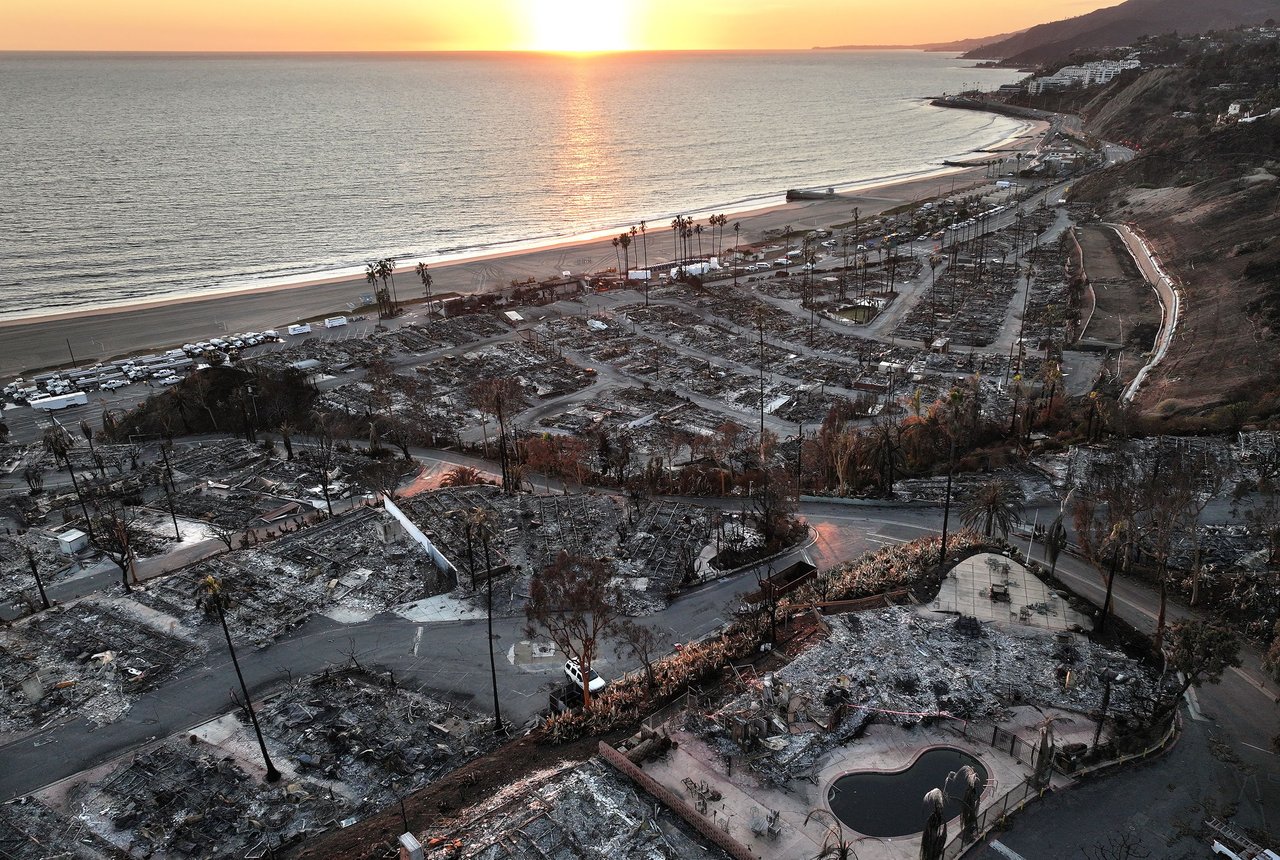
Wildfires have become a recurring reality across Southern California. When large fires hit high-value coastal and hillside communities, the rebuilding process often raises difficult questions about housing, land use, and local control.
One recent proposal that sparked widespread attention is California Senate Bill 549 (SB 549), which became closely associated with rebuilding efforts in Pacific Palisades after the January 2025 wildfires. While the bill applies specifically to Los Angeles County, it has caught the attention of homeowners, buyers, and investors throughout Southern California — including Orange County.
This article breaks down what SB 549 actually proposed, where it stands today, and why Orange County residents should understand the broader implications, even though the bill is not currently law.
Has SB 549 been approved?
No. SB 549 has not been approved or signed into law.
The bill passed the California State Senate in 2025 but did not complete the full legislative process. After moving to the Assembly, it was pulled back into committee following public feedback and has since been paused, with further action expected no earlier than the 2026 legislative session.
As of now:
-
SB 549 is not in effect
-
It does not change current rebuilding rules
-
It does not apply to Orange County
However, the proposal is still relevant because it highlights how California lawmakers are thinking about wildfire recovery and housing policy moving forward.
What SB 549 was designed to address
SB 549 was introduced in response to large-scale wildfire destruction in parts of Los Angeles County, including Pacific Palisades. Its stated purpose was to explore ways to coordinate and accelerate rebuilding after major disasters, particularly in areas where recovery can take years due to permitting delays, infrastructure challenges, and funding constraints.
The bill focused on two primary areas:
-
Rebuilding coordination after wildfires
-
How public financing tools could be used during recovery
The Resilient Rebuilding Authority concept
One of the most discussed aspects of SB 549 was the authorization for Los Angeles County to establish a Resilient Rebuilding Authority.
The idea behind this authority was to:
-
Coordinate rebuilding efforts across agencies
-
Help streamline recovery after large disasters
-
Address infrastructure and long-term planning needs in fire-impacted areas
While the bill did not mandate specific outcomes, the creation of a new authority raised questions about governance, transparency, and how decisions would be made during rebuilding.
In high-profile communities like Pacific Palisades, those concerns quickly became a focal point of public debate.
Why Pacific Palisades became the center of attention
Pacific Palisades is a coastal community with high property values and a strong single-family housing identity. After the 2025 fires, rebuilding there was already expected to be complex and expensive.
As SB 549 gained attention, it became closely associated — fairly or not — with fears that rebuilding could include:
-
Income-restricted housing requirements
-
Changes to long-standing neighborhood character
-
Reduced local input in rebuilding decisions
Some of the public reaction was driven by misinformation, but the bill also raised legitimate questions about how much control homeowners and local jurisdictions would have after a disaster.
Ultimately, the pushback led to the bill being paused before becoming law.
The financing side: why this matters
A less visible but important part of SB 549 involved Enhanced Infrastructure Financing Districts (EIFDs) and a related framework known as NIFTI-2.
EIFDs are tools that cities and counties can use to fund public projects — including infrastructure and housing — using future tax revenues. SB 549 proposed changes to how these districts could be financed in wildfire recovery areas, particularly shifting toward property tax-based funding mechanisms for future actions.
While technical, these financing tools matter because they influence:
-
What types of projects become feasible
-
How quickly rebuilding can occur
-
How public and private investment interact after disasters
Why Orange County homeowners should care
Even though SB 549 applies only to Los Angeles County, Orange County residents should pay attention for several reasons.
1. Wildfire risk exists in Orange County
Areas throughout Orange County — including hillside, canyon, and wildland-urban interface neighborhoods — face ongoing wildfire risk. Any future large-scale fire event could trigger similar conversations about rebuilding and recovery.
2. Policy ideas often start locally, then expand
California frequently tests policy concepts in specific regions before adapting them elsewhere. A bill like SB 549 can act as a policy blueprint, even if the original version never passes.
3. Rebuilding rules affect property value and timing
How rebuilding is handled after disasters directly impacts:
-
Permit timelines
-
Construction costs
-
Insurance availability
-
Neighborhood planning
These factors matter to homeowners, buyers, and investors making long-term decisions in Orange County real estate.
4. Housing and affordability debates don’t stay contained
Once rebuilding, affordability, and land use enter the conversation after a disaster, those topics tend to influence broader housing policy discussions statewide.
What SB 549 does not do
To be clear:
-
SB 549 does not force affordable housing into Orange County neighborhoods
-
It does not allow the state to take private property
-
It does not override current Orange County zoning or rebuilding rules
-
It does not change today’s real estate landscape
Understanding what a proposal does not do is just as important as understanding what it proposes.
What Orange County homeowners and buyers should watch going forward
While SB 549 is paused, similar themes are likely to reappear in future legislation. Homeowners and buyers should stay informed about:
-
Local wildfire mitigation and rebuilding plans
-
Insurance availability in higher-risk areas
-
Changes to state or county rebuilding timelines
-
Housing policy proposals tied to disaster recovery
If you own property in a fire-prone area, these factors can influence both short-term decisions and long-term value.
Bottom line
SB 549 is not law, but the conversation surrounding it is meaningful.
Pacific Palisades became the headline, but the broader issue is how California approaches wildfire recovery, housing, and rebuilding in high-cost communities. Orange County homeowners may never see SB 549 itself apply locally, but similar discussions could shape future policies that affect rebuilding, land use, and housing across Southern California.
Staying informed allows homeowners and buyers to separate proposals from reality — and make better real estate decisions as conditions evolve.